
FROM SILOS TO IMPACT
Building a Marketing OS from scratch with Notion
How to utilize the Corporate Newsroom Model for Marketing Operations.

Summary
Marketing performance is rarely limited by creativity. It is often limited by structure.
Before I introduced the Corporate Newsroom Model as a new way of work to the marketing team, strong individual activities existed but lacked a shared system for prioritization, coordination, and visibility.
In consequence, opportunities were difficult to align with company goals.
By organizing work around relevant topics, stories and momentums in marketing, all team efforts became transparent, comparable, and strategically steerable.
100
+ mio
Reach
4
+ mio €
Ad Equivalence Value with PR
150
%
Lead Magnet Performance Increase
Marketing delivered strong individual output. But without a shared architecture, impact remained fragmented and reactive.
When I joined Purpose Green, marketing and communications efforts were strong — but structurally fragmented.
-
PR, marketing, events and design operated in parallel
-
Planning was often channel-first instead of topic-first
-
Short-term execution competed with long-term positioning
-
Visibility across campaigns, workload, and strategic priorities was limited
-
No unified system connected communication to OKRs
The issue: strong individual output, but no integrated architecture.
We shifted from executing content to orchestrating narratives.
Marketing became structured, measurable, and strategically aligned.
Inspired by the Corporate Newsroom Model based on the works of Prof. Dr. Christoph Moss (an idea that has its origin in real newsrooms of leading news media), I translated editorial thinking into a scalable marketing operating system. Instead of organizing around formats or channels, we reorganized around:
Topics. Moments. Strategic narratives.
This meant:
-
Campaigns became containers for topics
-
Channels became distribution tools
-
Meetings became editorial boards
-
OKRs became embedded in content logic
This initiative was pushed bottom-up and later recognized and supported by founders and the full marketing team.
Editorial Rhythm Over Marketing Chaos
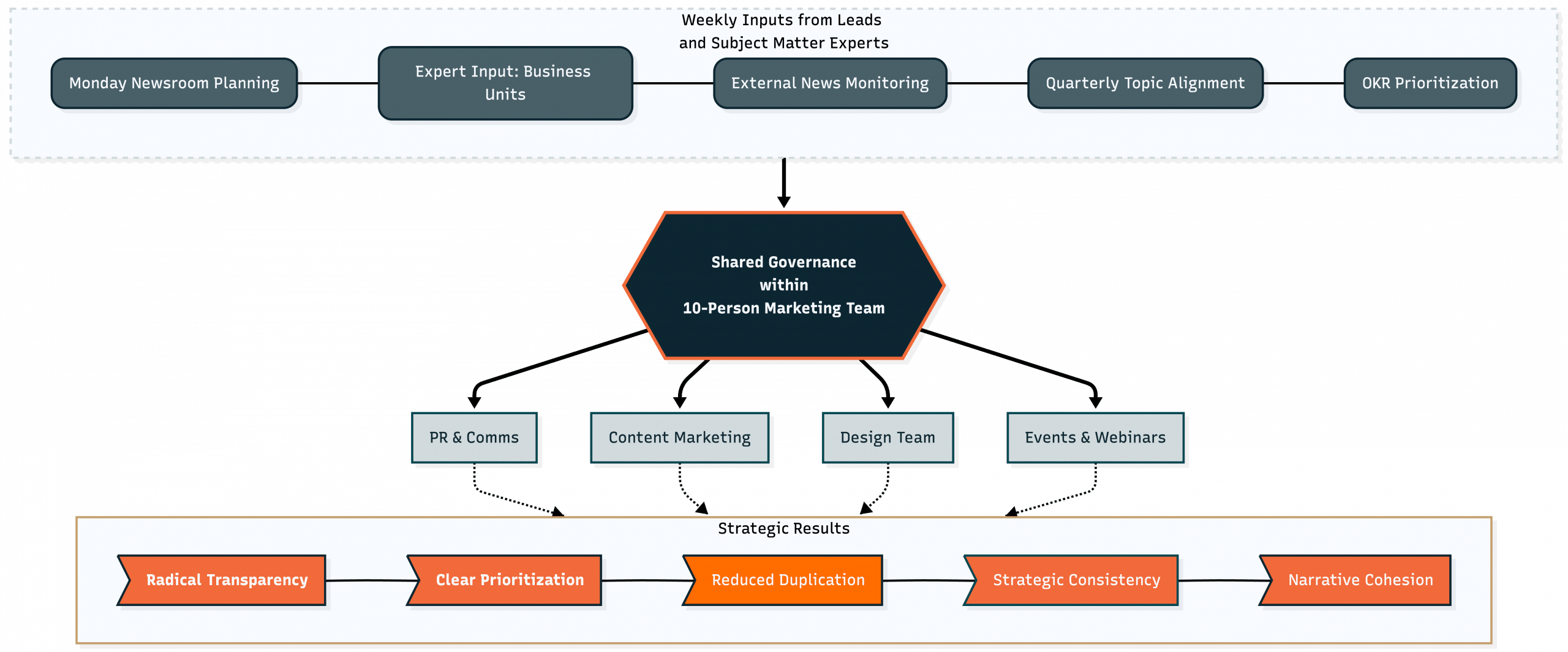
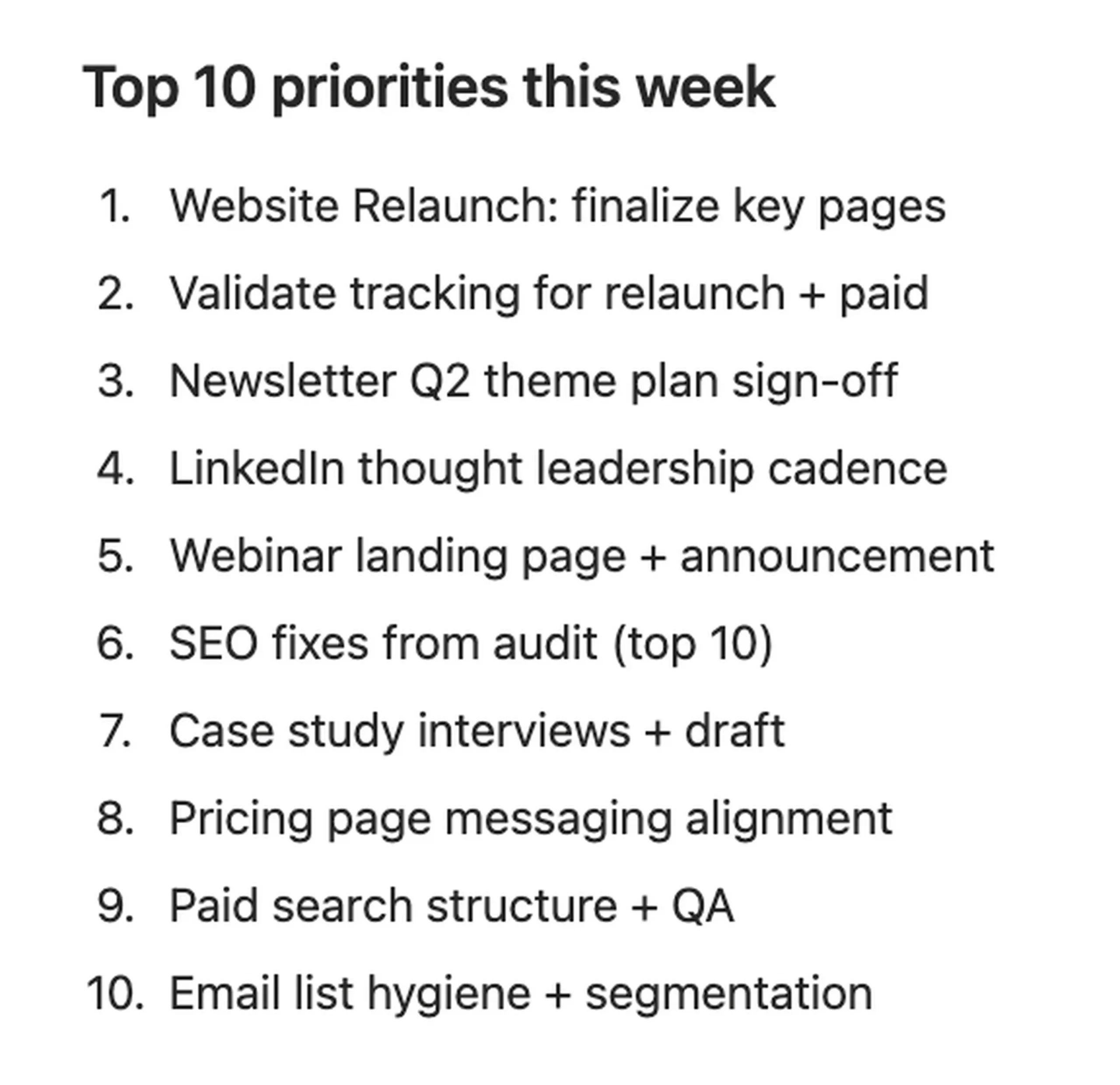
A weekly newsroom cadence aligns PR, marketing, design, and events around shared priorities and company goals.
We established a weekly Editorial Board meeting:
-
Monday newsroom planning
-
Expert input from business units
-
External news monitoring
-
Alignment with quarterly topics
-
Prioritization based on OKRs
No dedicated Topic Desk role — but a shared editorial governance model across a 10-person marketing team.
This created:
-
Radical transparency
-
Clear prioritization
-
Reduced duplication
-
Strategic consistency
-
Narrative cohesion
The Centralized Marketing Command Center (Built in Notion)
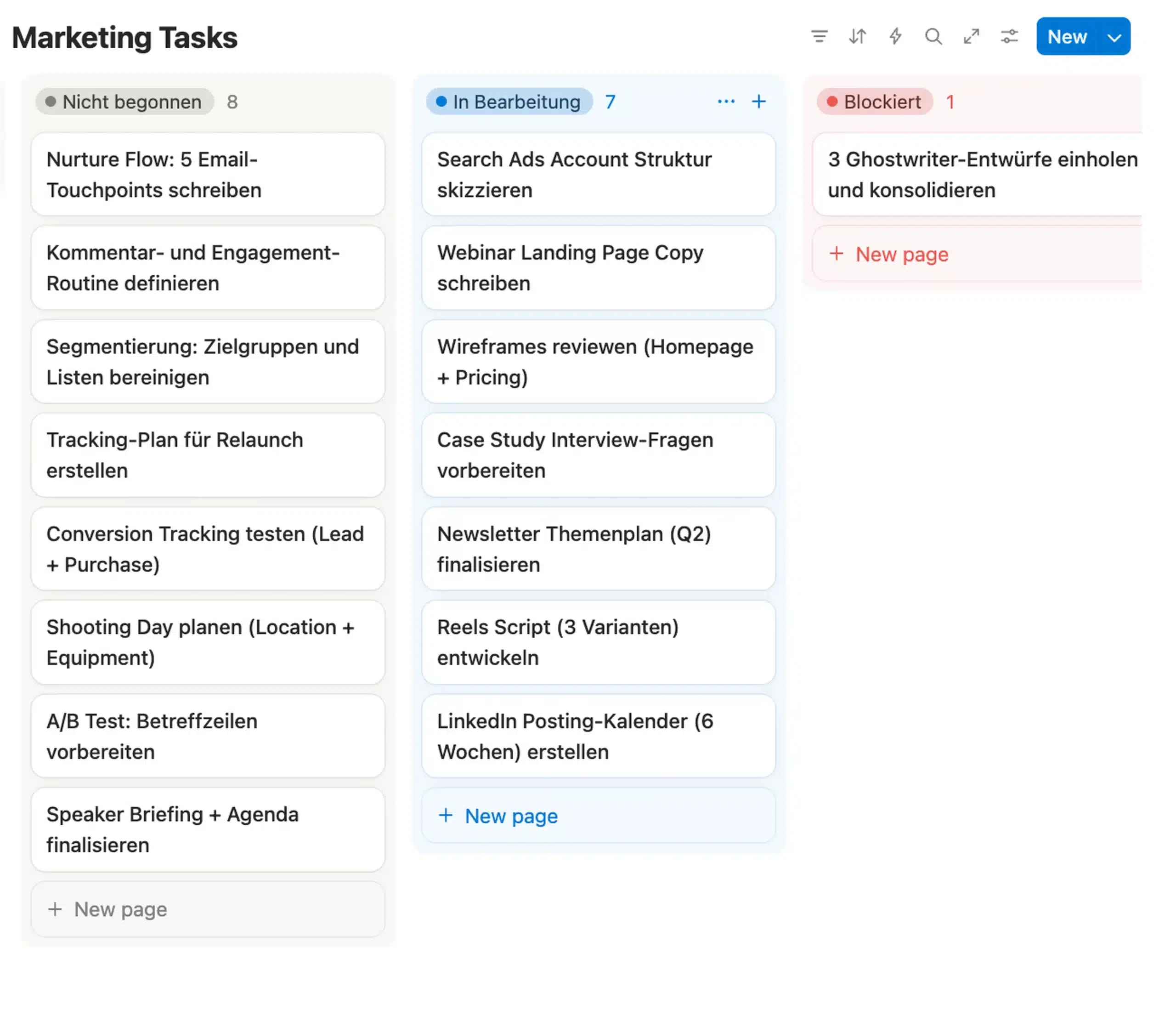
I designed a fully relational planning environment based on three core databases:
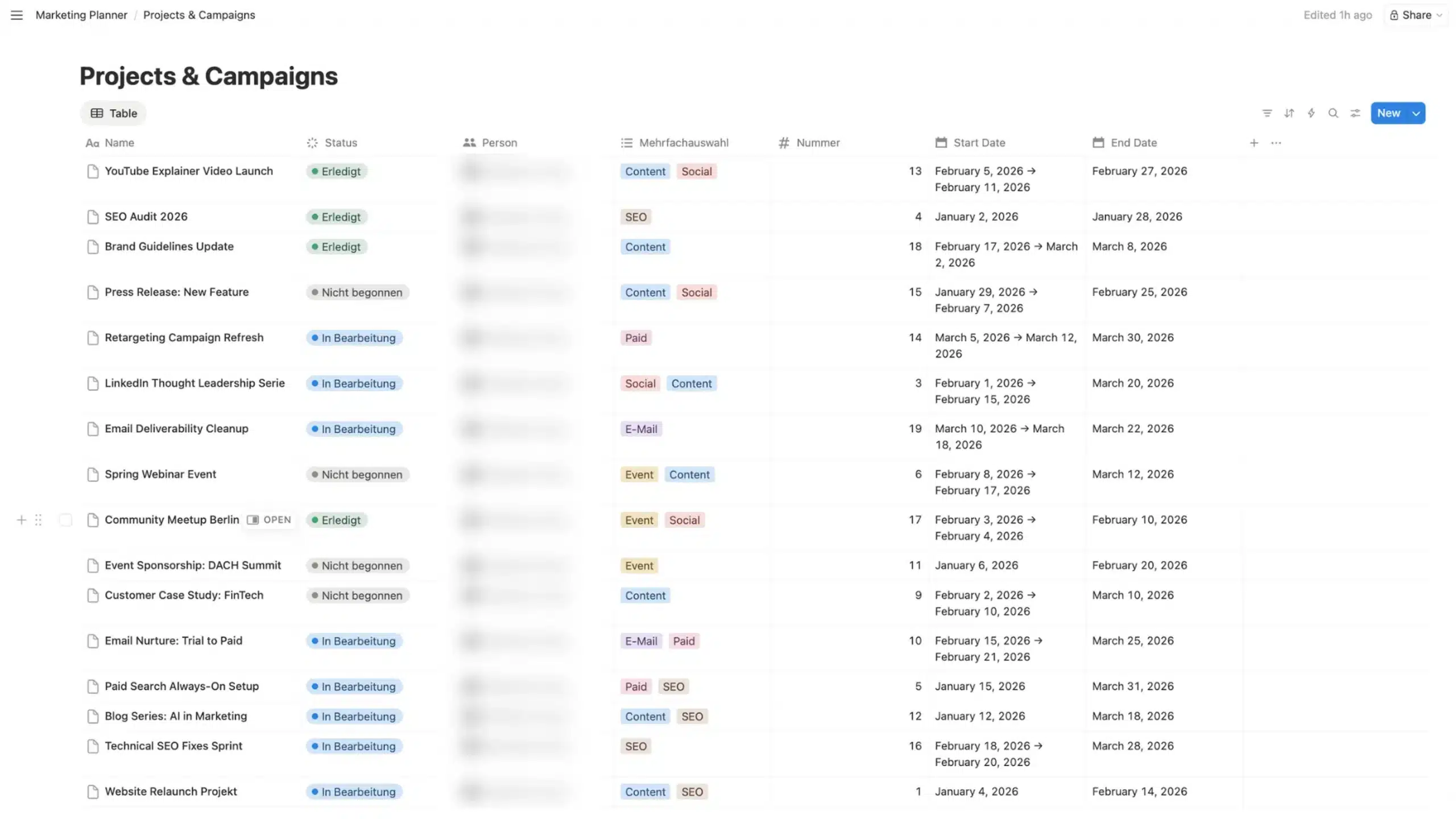
1️⃣ Projects & Campaigns
The strategic container.
-
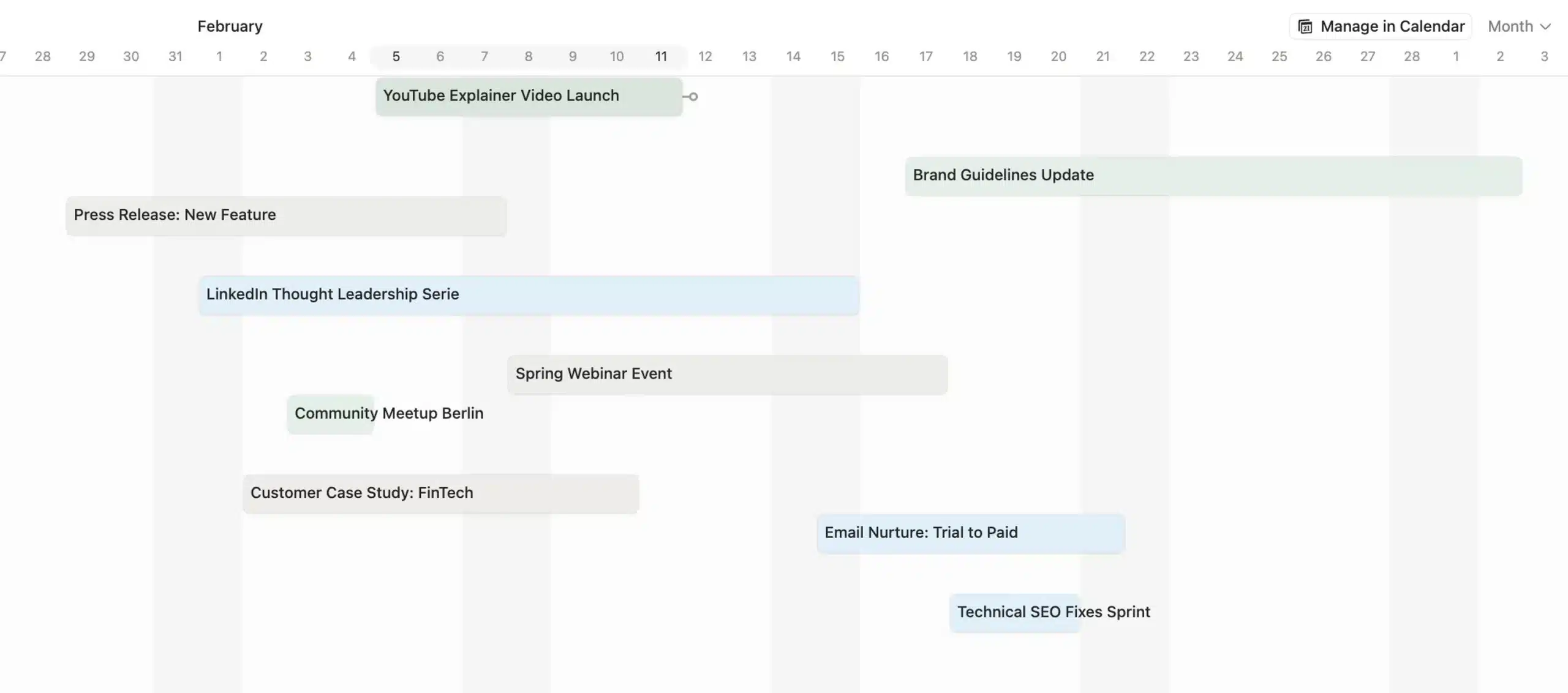
Short-term projects
-
Long-term campaigns
-
Quarterly topics aligned with company goals
-
Topic clusters per business unit
-
OKR linkage
-
Aggregated work-hour estimation
-
Story points
-
Status and progress visibility
This became the strategic control layer.
2️⃣ Tasks
The execution engine.
-
All operational tasks linked to campaigns
-
Story points for complexity estimation
-
Work hour planning per task
-
Aggregation on project level
-
Cross-team visibility
This created transparency and realistic workload forecasting.
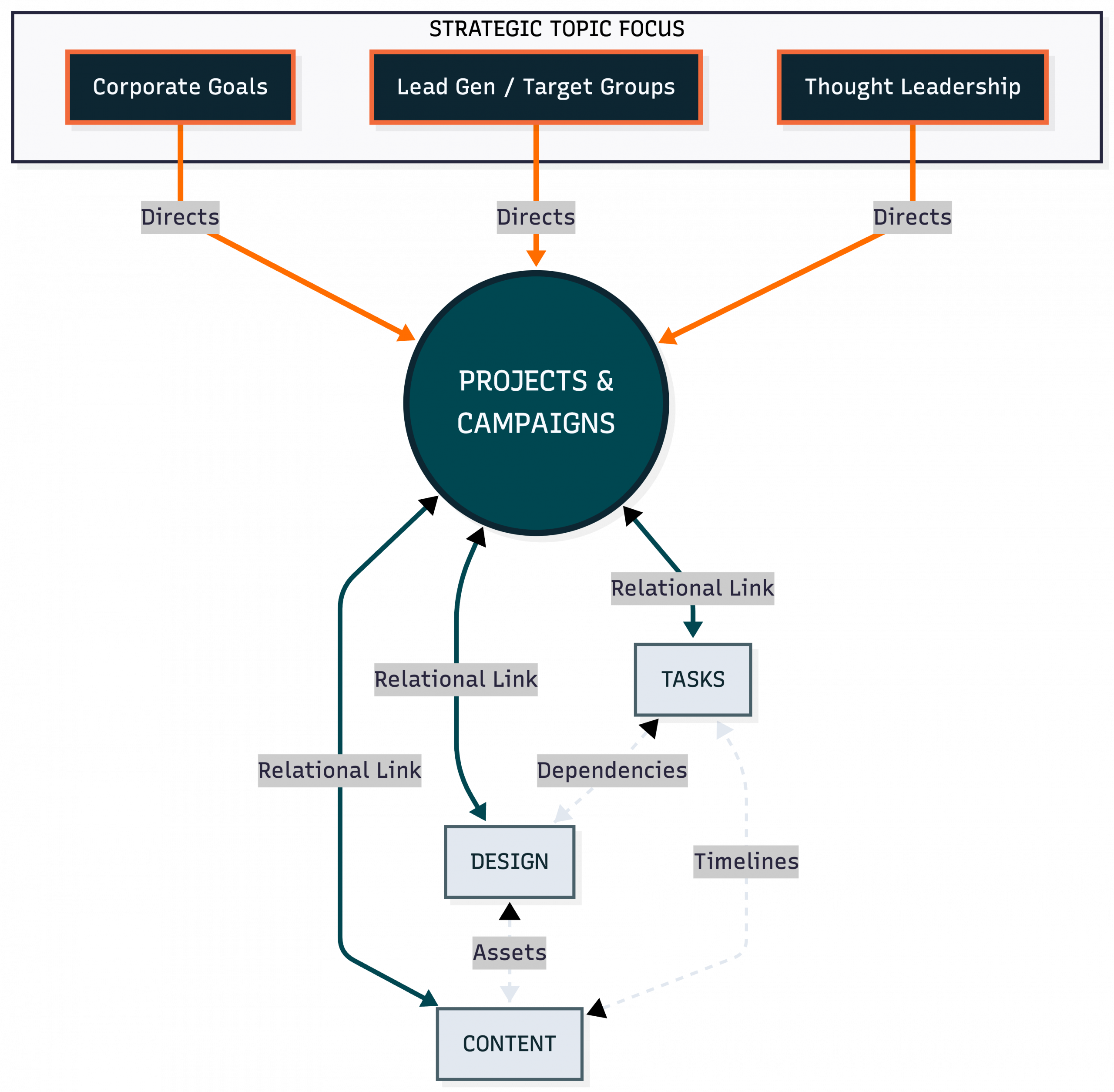
3️⃣ Content
The distribution layer.
-
Structured by channel and format (PESO model)
-
Draft → approval → publishing workflow
-
Linked to campaigns
-
Linked to tasks
-
Connected to design deliverables
This turned content from scattered output into measurable assets.
4️⃣ Design Integration
Design tasks were directly connected to campaigns.
No more “design as service unit.”
Instead:
Design became an integrated campaign function.
From Structure to Performance
A topic-driven operating model amplified visibility, coordination, and earned media impact.
Within this structured system, we achieved within one year only:
-
100+ million earned media reach
-
€4 million media advertising equivalence (AVE)
-
Significant increase in brand reputation
-
Stronger founder positioning
-
Clear topic ownership in climate-tech discourse
Beyond PR metrics, the system enabled:
-
Better campaign orchestration
-
Predictable workload planning
-
Strategic alignment with company OKRs
-
Cross-functional collaboration
-
Reduced administrative overhead

